
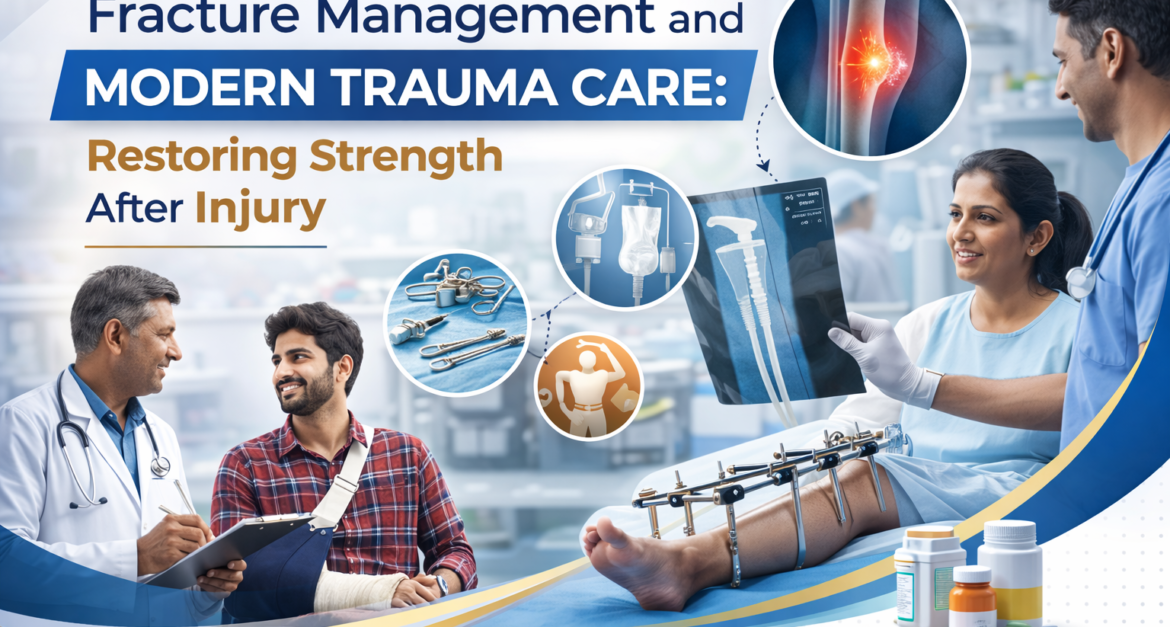
A fracture can happen in a matter of seconds — a fall at home, a sports injury, or a road traffic accident. What follows, however, is a journey that requires careful diagnosis, precise treatment, and structured rehabilitation. Bones are living tissues with remarkable healing ability, but recovery depends significantly on how the injury is managed in the early stages.
Modern orthopaedic trauma care has evolved tremendously over the years. Gone are the days when fractures automatically meant months of immobilization and uncertainty. Today, scientific advancements, improved surgical techniques, and better rehabilitation protocols have made fracture management safer, more precise, and more predictable.
Understanding how fractures are treated helps patients approach recovery with clarity and confidence.
Understanding Fractures
A fracture is simply a break in the continuity of a bone, but not all fractures are the same. Some are simple and stable, where the bone pieces remain aligned. Others are displaced, comminuted (broken into multiple pieces), or involve joints. In elderly patients with osteoporosis, even minor falls can result in fractures, while younger individuals often sustain high-energy fractures due to sports or accidents.
Symptoms typically include pain, swelling, bruising, deformity, and difficulty moving the affected limb. In severe injuries, immediate medical attention is crucial to prevent complications such as nerve or blood vessel damage.
The first priority in trauma care is accurate assessment. Clinical examination and imaging — usually X-rays and sometimes CT scans — help determine the type, location, and severity of the fracture. Once this is established, a tailored treatment plan can be created.
Conservative Management: When Surgery Is Not Required
Not every fracture requires surgery. Stable fractures where bone alignment is preserved can often be treated with immobilization using casts, braces, or splints. The goal is to keep the bone fragments properly aligned while natural healing occurs.
During this phase, follow-up visits are essential to monitor healing progress through repeat imaging. Proper nutrition, including adequate protein, calcium, and vitamin D intake, supports bone repair. Gradual reintroduction of movement under guidance helps prevent stiffness.
Conservative management is commonly used for simple wrist fractures, certain ankle fractures, and minor bone injuries where stability is intact.
Surgical Management: Precision and Early Mobilization
When fractures are displaced, unstable, involve joints, or result from high-energy trauma, surgical intervention may be necessary. The aim of surgery is anatomical reduction — restoring the bone to its original position — and stabilizing it using implants such as plates, screws, rods, or nails.
Modern trauma surgery focuses not only on fixing the bone but also on enabling early movement. Stable internal fixation allows patients to begin controlled mobilization sooner, reducing the risk of stiffness, muscle wasting, and joint rigidity.
Advancements in minimally invasive techniques have improved outcomes significantly. Smaller incisions, better implant materials, and image-guided precision enhance healing while minimizing tissue disruption.
Managing Complex Fractures
Certain fractures require special expertise — for example, fractures involving joints (such as hip, knee, or shoulder fractures) demand accurate alignment to preserve smooth joint movement. Poorly aligned joint fractures can lead to early arthritis and chronic pain.
In elderly patients, hip fractures are a major concern because prolonged immobilization can lead to serious complications such as blood clots, pneumonia, or muscle loss. Early surgical stabilization in such cases often improves survival and functional recovery.
High-energy trauma cases involving multiple injuries require coordinated care, sometimes involving multiple specialists. Modern trauma systems are designed to prioritize life-threatening conditions while stabilizing orthopedic injuries systematically.
Rehabilitation: The Overlooked Foundation
One of the most critical phases in fracture management is rehabilitation. Healing of bone is only one part of recovery; restoring movement, strength, and confidence is equally important.
Physiotherapy begins as soon as medically appropriate. Depending on the fracture, weight-bearing may be allowed gradually. Exercises focus on joint mobility, muscle strengthening, balance, and coordination. This structured approach prevents stiffness and long-term disability.
Recovery timelines vary depending on the type of fracture, age, bone quality, and overall health. Simple fractures may heal within weeks, whereas complex injuries require several months of guided rehabilitation.
Potential Complications and Prevention
Modern trauma care aims to minimize complications such as delayed union, non-union, infection, malalignment, or implant failure. Careful surgical planning, sterile techniques, and regular follow-ups play a crucial role in achieving successful outcomes.
Patients can actively contribute to healing by following weight-bearing instructions, attending physiotherapy sessions, maintaining proper nutrition, and avoiding tobacco use, which can delay bone healing.
Conclusion
A fracture may temporarily interrupt life, but with timely and expert management, most individuals regain full function. Modern orthopaedic trauma care emphasizes precision, early mobilization, and structured rehabilitation to ensure safe and efficient recovery.
The goal is not merely to repair broken bones, but to restore strength, mobility, and independence — allowing patients to return confidently to their daily lives.